Svalbard · 01-09 giugno 2001Svalbard · 01-09 June 2001
IOTA EU-063Poolepynten · 78°26'39"N 11°53'37"EWW Locator JQ58WKParco nazionale di ForlandetForlandet National Park
🏆
JW0PK · “IOTA TROPHY 2001” WINNER!Premiata come «Most Outstanding Expedition in Africa-Asia-Europe» (miglior spedizione dell'anno in Africa, Asia ed Europa)“Most Outstanding Expedition in Africa-Asia-Europe”
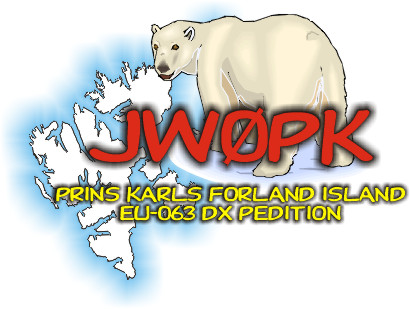
JW0PK - Prins Karls Forland (Svalbard), IOTA EU-063: DXpedition internazionale dell'1-9 giugno 2001 da Poolepynten, sulla costa est dell'isola, con 11 operatori di 7 paesi, tra cui IK2XDE e IK2XDF. Qui trovi il racconto completo, il log on line, un video, le statistiche, le foto, la QSL e gli sponsor.JW0PK - Prins Karls Forland Island (Svalbard), IOTA EU-063: international DXpedition of 1-9 June 2001 from Poolepynten, on the east coast of the island, with 11 operators from 7 countries, including IK2XDE and IK2XDF. Here you will find the full story, the online log, a video, the statistics, the photos, the QSL card and the sponsors.
12.732QSO totalitotal
6.275QSO CW
6.030QSO SSB
427RTTY + PSK31
178QSO in 6 metrion 6 metres
11operatorioperators
Log Search · JW0PK 2001
Hai collegato JW0PK? Il log della spedizione è consultabile on line: scrivi il tuo nominativo e scopri se sei a log.Did you work JW0PK? The DXpedition log can be searched online: enter your callsign and find out whether you are in the log.
Il log on line è ospitato sul sito di SP7DQR (On-line Log & OQRS di Adam Niedzielski & SP7DQR) e si apre in una nuova scheda. QSL via SP5DRH · Statistiche del logThe online log is hosted on the SP7DQR website (On-line Log & OQRS by Adam Niedzielski & SP7DQR) and opens in a new tab. QSL via SP5DRH · Log statistics
Video · JW0PK in 6 metrion 6 metres
«JW0PK to 6m dipole», video di Johannes Karhula: JW0PK ascoltata in 6 metri con un semplice dipolo. Il video parte direttamente in questa pagina con un clic; se preferisci, aprilo su YouTube.“JW0PK to 6m dipole”, a video by Johannes Karhula: JW0PK heard on 6 metres with a simple dipole. The video plays right in this page with one click; if you prefer, open it on YouTube.
La storia della spedizioneThe story of the DXpedition
Dopo un anno di preparativi da parte del comitato organizzatore, un gruppo internazionale di 11 radioamatori ha portato in aria JW0PK da una delle isole europee più ricercate del programma IOTA, Prins Karls Forland. Questo racconto vuole dare un'idea di come ci siamo arrivati, di come abbiamo passato il tempo sull'isola e di come siamo tornati.After a year of preparations by the organization committee, a group of 11 international amateur radio operators aired JW0PK from one of Europe’s most wanted islands of the IOTA program, Prins Karls Forland. This document is intended to give you an impression of how we got there, how we spent our time on the island and how we got back.
La localitàThe location
Per l'operazione, valida per il gruppo «Spitsbergen’s Coastal Islands» EU-063, è stato scelto un punto sulla costa orientale dell'isola Prins Karls Forland, la più occidentale delle Svalbard. La posizione esatta: 78° 26’ 39” N e 11° 53’ 37” E. Organizzare una DXpedition in quella zona è stata una bella sfida: oltre a operatori, logistica, sponsor e così via, servivano anche permessi speciali del Governatore delle Svalbard.For the operation that should count for “Spitsbergen’s Coastal Islands” EU-063, a location was chosen on the East coast of Prins Karls Forland island, the most western island of Svalbard. The exact location to be 78° 26’ 39” N and 11° 53’ 37” E. To mount a DXpedition to that area was quite a challenge. Apart from arranging operators, logistics, sponsors, etc. also special permits needed to be arranged from the Governor of Svalbard.
IOTA Most Wanted List (EU)IOTA Most Wanted List (EU)
Le informazioni che seguono sono tratte dal sito IOTA (allora www.rsgbiota.org, oggi www.iota-world.org). Gli elenchi sono pensati per chi organizza DXpedition: riportano i gruppi IOTA più ricercati di ogni continente (qui l'Europa) e, per ciascuno, la percentuale di iscritti che ha presentato QSL valide.The following information is collected from the IOTA web site (at the time www.rsgbiota.org, today www.iota-world.org). The listings are provided for the benefit of intending DXpeditioners. They list the most wanted IOTA Groups for each continent (in this case Europe) and show for each group the proportion of members who have submitted valid cards.
I gruppi «rari», cioè quelli accreditati da meno del 10% degli iscritti, sono segnati con «*». Per un'operazione da uno di questi gruppi servono i dati di convalida, da inviare al più presto al Comitato IOTA (vedi sezione F. 3 del regolamento). I dati rispecchiano la situazione al 28/04/2001 e cambiano man mano che le QSL vengono ricevute e presentate per l'accredito. In ogni momento ci sono operazioni appena concluse, le cui QSL non sono ancora in circolazione: per questo alcuni gruppi risultano lavorati da nessun iscritto, o da molti meno di quanti ci si aspetterebbe vista la portata dell'attività.Note that “rare” groups, defined as those which less than 10% of members have credited, have been marked with “*”. For an operation from any of these groups, validation data is required and will need to be sent to the IOTA Committee as soon as possible (refer to Section F. 3 of the Rules). The information here reflects the position as of 28/04/2001. It will change as cards are received and submitted for credit. At any time there will be operations that have just taken place, for which cards will not yet be in circulation. This explains the reason why some groups are shown as having been worked by no members or by far fewer members than expected - given the scale of the activity.
IOTA
PrefissoPrefix
GruppoGroup
Accreditato daCredited by
RaroRare
EU-188
R1P
Pechorskoye Sea Coast West group
0.00%
*
EU-063
JW
Spitsbergen's Coastal Islands
3.60%
*
EU-187
SV9
Crete's Coastal Islands
3.60%
*
EU-186
TA
Turkey group
4.80%
*
EU-181
LZ
Bulgaria group
4.90%
*
EU-185
R6A-D
Krasnodarskiy Kray Black Sea Coast group
7.80%
*
EU-180
UR
Respublika Krym Black Sea Coast group
9.30%
*
EU-182
UR
Odes'ka Obl Black Sea Coast group
9.50%
*
EU-179
UR
Mykolayivs'ka/Khersons'ka Obl Black Sea C
10.00%
EU-183
YO
Romania group
11.60%
Svalbard · Prins Karls Forland
SvalbardSvalbard
Le Svalbard nell'Artico.Svalbard in the Arctic.
Le Svalbard sono un arcipelago compreso tra 71-81°N e 10-35°E, con una superficie di circa 63.000 km², per circa il 60% coperta da ghiacciai. Le isole maggiori sono Spitsbergen, Nordostlandet, Barentsøya, Edgeøya e Prins Karls Forland.Svalbard is a group of islands located between 71-81°N and 10-35°E and covers an area of about 63.000 sq km of which approximately 60% is covered with glaciers. The largest islands are Spitsbergen, Nordostlandet, Barentsøya, Edgeøya and Prins Karls Forland.
Longyearbyen è il centro amministrativo e conta circa 1400 abitanti. Barentsburg è una comunità mineraria russa con 850 abitanti. L'altra comunità mineraria è Sveagruva, con 90 pendolari. Il centro di ricerca internazionale norvegese si trova a Ny-Alesund, con 40-100 tra ricercatori e personale di supporto (secondo la stagione), mentre a Hornsund c'è una stazione di ricerca polacca con soli 8 abitanti.Longyearbyen is the administrative center and has approximately 1400 inhabitants. Barentsburg is a Russian mining community and is housing 850 inhabitants. The other mining community is Sveagruva with 90 commuters. The Norwegian international research center is at Ny-Alesund with 40-100 researchers and support staff (depending on the season) and a Polish research station is at Hornsund with only 8 inhabitants.
Prins Karls ForlandPrins Karls Forland
Il Parco nazionale di Forlandet è il più piccolo dei tre parchi nazionali. Il paesaggio di quest'isola lunga e stretta va da coste basse ad alte cime, con numerosi piccoli ghiacciai. Vi si trovano importanti siti di nidificazione di edredoni e oche. L'isola è lambita dal ramo più settentrionale della Corrente del Golfo e, grazie al clima relativamente mite, ospita una delle colonie nidificanti di uria più a nord del mondo e la popolazione più settentrionale di foca comune. Superficie: 640 km²; area protetta dal 1973.The Forlandet National Park is the smallest of the three national parks. The landscape of this long, narrow island varies from low-lying shores to high peaks, with a number of small glaciers. There are important breeding sites of eider ducks and geese. The island lies in the path of the northernmost branch of the Gulf Stream, and as a result of the relatively mild climate the island is home both to one of the world's most northerly breeding colonies of guillemot and to the northernmost population of common seal. Area: 640 km² and protected since 1973.
Mappa delle Svalbard, con Prins Karls Forland sulla costa ovest.Map of Svalbard with Prins Karls Forland on the West coast.
Poolepynten
Mappa di dettaglio con Poolepynten sulla punta della penisola. Durante la nostra permanenza tutta la zona era coperta da uno spesso strato di ghiaccio e neve, come si vede nella foto qui sotto. Solo al campo si riusciva a vedere un po' di terreno, come se fossimo su una barriera corallina.Detailed map with Poolepynten at the tip of the peninsula. During our stay the whole area was covered with a thick layer of ice and snow as can be seen on the picture below. Only at our camp we were able to see some soil as if we were on a coral reef.La foto mostra chiaramente che tutta la zona è ancora coperta di ghiaccio e neve. Le montagne sono sull'isola principale, Spitsbergen.This picture shows clearly that the whole area is still covered with ice and snow. The mountains are located at the main island Spitsbergen.
Il teamThe team
LA3OHATerje Woodroh HovdeNorvegiaNorway
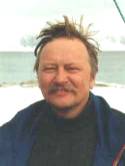
SP5DRHJacek Piotr KubiakPoloniaPoland
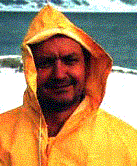
SP5LCCWitold PerzanowskiPoloniaPoland
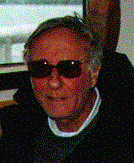
I2ADNAngelo Raffaele d’AnnaItaliaItaly
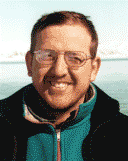
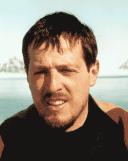
IK2XDEAndrea BernardoItaliaItaly
IK2XDFGianpaolo BernardoItaliaItaly
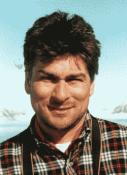
IK4MEDDario CalzaItaliaItaly
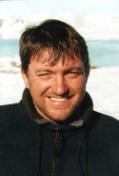
ON4AMXMarc MichielsBelgioBelgium
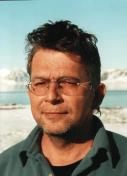
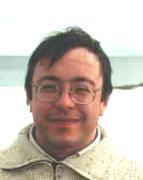
DL5NAMChris SauvageotGermaniaGermany
F5PBLClaude TerrierFranciaFrance
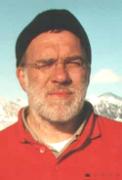
PA5NTGerben Albert MentingPaesi BassiNetherlands
Il viaggio e lo sbarcoTransport and landing
Il viaggioTransport
La M/S Farm ormeggiata al molo.The M/S Farm at the pier.
La prima tappa del viaggio era il ritrovo a Longyearbyen. Il gruppo iniziale, formato da LA3OHA, SP5DRH, SP5LCC, I2ADN, IK2XDE e IK4MED, si è riunito per primo e ha caricato tutte le attrezzature e le provviste sulla M/S Farm, noleggiata per questa DXpedition. Appena arrivati IK2XDF e PA5NT, il 31 maggio verso mezzanotte, la squadra è andata al porto a caricare gli ultimi materiali, e così il primo gruppo ha lasciato Longyearbyen alle 01:15 del 1° giugno, rotta su Prins Karls Forland. LA3OHA è rimasto a Longyearbyen ad attendere gli altri componenti del secondo gruppo.The first leg of the trip was to meet in Longyearbyen. The initial group of LA3OHA, SP5DRH, SP5LCC, I2ADN, IK2XDE and IK4MED were to meet first. They loaded the M/S Farm, which was chartered for this DXpedition, with all equipment and supplies. As soon as IK2XDF and PA5NT arrived on May 31 around midnight, the team went to the harbor to load the last pieces of equipment and so the first group left Longyearbyen at 01:15 hrs on June 1st, Prins Karls Forland ahead. LA3OHA stayed in Longyearbyen to collect the other people for the second group.
Il morale era alto e sognavamo, o pensavamo, a quello che sarebbe successo nei 9 giorni successivi.The spirit was good and we were dreaming or thinking about what was going to happen the next 9 days.
Dopo 7 ore di navigazione con la M/S Farm sul mare agitato, alle 08:00 siamo arrivati a Poolepynten, sull'isola Prins Karls Forland. La Farm ha gettato l'ancora a circa 100 metri dalla riva e il primo sbarco con lo zodiac è avvenuto alle 08:20. SP5DRH e IK2XDE sono stati i primi a mettere piede a terra.After a 7 hours long journey with the M/S Farm on rough seas, we arrived at 08:00 hrs at Poolepynten on Prins Karls Forland island. The Farm anchored about 100 meters off shore and the first landing with the zodiac was at 08:20 hrs. SP5DRH and IK2XDE were the first to go ashore.
Materiali e persone sono stati portati a terra con 5 viaggi dello zodiac, conclusi alle 10:00. A quel punto la M/S Farm è tornata a Longyearbyen a prendere il secondo gruppo e noi siamo rimasti soli, su un'isola fredda, ventosa e coperta di neve, con una montagna di materiale. C'era un sacco di lavoro da fare.All equipment and people were brought ashore in 5 trips with the zodiac and this was completed at 10:00 hrs. At this point the M/S Farm returned to Longyearbyen to collect the second group and we were left alone on a cold and windy island covered with snow and with a pile of cargo. Lots of work to do.
Lo sbarcoLanding
La foto qui sotto mostra il primo gruppo subito dopo lo sbarco: ci sono IK2XDE, IK2XDF, I2ADN e SP5DRH, pronti a cominciare il vero lavoro della DXpedition. Avevamo con noi due pistole e due fucili, per proteggerci nel caso un orso polare si fosse fatto vedere e avesse provato ad avvicinarsi troppo al campo. Il carico comprendeva le tende grandi (non le piccole tende per dormire), stufe, generatori, metà del carburante, cibo, acqua, pali, antenne e molto altro.The picture below shows the first group just after landing. On this picture are IK2XDE, IK2XDF, I2ADN and SP5DRH who are ready to start the real DXpedition work. Two pistols and two rifles were brought to protect us in case a polar bear would show up and trying to come too close to our camp. The cargo included the big tents (not the small sleeping tents), heaters, generators, half of the fuel, food, water, masts, antennas and a lot more.
Il primo gruppo subito dopo lo sbarco: IK2XDE, IK2XDF, I2ADN e SP5DRH.The first group just after landing: IK2XDE, IK2XDF, I2ADN and SP5DRH.
Una volta che tutto il materiale era sulla spiaggia, abbiamo dovuto trasportarlo nel punto in cui montare il campo. Per prima abbiamo eretto la tenda lavvu (la tradizionale tenda norvegese), che doveva servirci da riparo comune. Poi abbiamo montato le due tende per le stazioni radio. A lavoro finito erano circa le 14:30, e ci siamo concessi il primo caffè con un po' di pane. Poi sono state sistemate le brande nella lavvu, mentre altri hanno tolto dagli imballi i generatori e li hanno riempiti di olio e benzina: da quel momento avevamo la corrente elettrica. Una sensazione strana: nelle tende non servivano lampade, perché c'era luce 24 ore su 24.After all the equipment was at the beach, we had to carry everything to the area where we had to establish the camp. First we erected the lavvu tent (traditional Norwegian tent) because this should serve as our general purpose shelter. Next we erected the two tents for the radio stations. By the time this was done, it was approximately 14:30 hrs and we started to have our first coffee and bread. Next the beds were established in the lavvu tent and others unpacked the generators and filled them with oil and petrol after which we had electric power available. One strange experience was that we did not need lamps in our tents as it was light 24 hours a day.
Il montaggio delle stazioni radioEstablishing the radio stations
Pronte le tende, alcuni hanno cominciato a distribuire viveri, attrezzature, effetti personali e così via nelle rispettive tende; altri hanno assemblato e innalzato le antenne. Alle 18:00 era pronta la Force 12 - C3S e verso le 19:00 lo erano anche l'antenna per i 6 metri e la tribanda ECO Asay: le operazioni potevano cominciare.After the tents were ready, some people started to distribute all food, equipment, personal belongings, etc. to the respective tents. Some others assembled and erected the antennas. At 18:00 hrs the Force 12 - C3S antenna was ready and around 19:00 hrs the 6 meter and ECO Asay tri-bander were also ready and operations could start.
L'arrivo del secondo gruppoThe next group arrival
Il giorno dopo, 2 giugno, verso le 07:40 abbiamo avvistato la M/S Farm all'orizzonte. Alle 08:15 la Farm ha gettato l'ancora davanti al campo e ha scaricato il resto del materiale, poi portato al campo. Insieme al materiale sono arrivati gli altri componenti, LA3OHA, DL5NAM, ON4AMX e F5PBL, e la squadra era al completo.The next day, June 2, we noticed the M/S Farm at the horizon around 07:40 hrs. At 08:15 the Farm anchored in front of the camp and offloaded and transported the rest of the equipment to the camp. Along with the equipment, the remaining team members LA3OHA, DL5NAM, ON4AMX and F5PBL arrived at the camp to complete the team.
Il campo e le antenneThe camp and the antennas
Il campoThe camp
Tutte le tende e i pali sono stati piazzati sulla piccola striscia di sabbia, l'unico punto in cui si potevano fissare ancoraggi e picchetti.All tents and masts were placed on the small sandy strip, the only area that allowed us to fix the anchors and pins for these objects.
Mappa del campo a Poolepynten (clicca per ingrandire).Map of the camp at Poolepynten (click to enlarge).
Disposizione delle antenneAntenna layout
Le due antenne HF erano montate su pali di 8 metri, quella per i 6 metri a circa 12 metri.The two HF aerials were placed on 8 meter masts and the 6 meter antenna was at about 12 meters.
Mappa delle antenne a Poolepynten (clicca per ingrandire).Map of the antennas at Poolepynten (click to enlarge).
Le stazioni radioThe radio stations
Erano in uso cinque stazioni radio: una per i 6 metri, una per il satellite e tre per le HF.Five radio stations were in use, one for 6 meters, one for satellite and three for HF.
Stazione 1 - HFStation 1 - HF
IC-738
IC2KL con AT500 (circa 300 Watt)IC2KL with AT500 (about 300 Watts)
Yagi ECO Asay 3 elementi per 10, 15 e 20 metriECO Asay 3 elements yagi for 10, 15 and 20 meters
Carolina Windom 160 Special
Modem SCS PTC-II (per RTTY e PSK31)SCS PTC-II modem (for RTTY and PSK31)
Stazione 4 - HFStation 4 - HF
TS-50 con accordatore KenwoodTS-50 with Kenwood tuner
Dipolo ON4AMX per i 17 metriON4AMX dipole for 17 meters
Stazione 5 - SatelliteStation 5 - Satellite
IC-821
Yagi 4 elementi 2 m e yagi 12 elementi 70 cmFour elements 2 m yagi and 12 elements 70 cm yagi
Tutte le stazioni usavano il programma di log CT.All stations were using CT logging software.
La corrente era prodotta da 4 generatori a benzina da circa 1 kW ciascuno. Avevamo portato 15 taniche di benzina, cioè circa 300 litri. Nelle due stazioni HF principali e in quella dei 6 metri l'uscita a 12 V c.c. degli alimentatori era tamponata da batterie da 200 Ah.Power was generated by 4 generators, each of them approximately 1 kW and running on petrol. We brought 15 jerry cans with petrol, which is about 300 liters. At the two main HF stations and the six meters station, the 12 VDC output of the power supplies was buffered by 200 Ah batteries.
Una veduta del campo, con al centro la tenda lavvu a forma di cono.A view on the camp with the cone shaped lavvu tent in the middle.
La tenda bianca a sinistra è quella che alla fine non è stata usata per le radio: tutte le stazioni sono state sistemate nelle due tende bianche all'altra estremità. Le tende per dormire erano sparse attorno alla lavvu. La forma del campo è stata, più o meno, decisa dal paesaggio stesso: per tende e pali serviva un fondo di sabbia, e ce n'era appena abbastanza. Sullo sfondo si vedono il segnale arancione e la capanna del Governatore (con il camino).The white tent at the left is the one that finally was not used for a radio station. Instead, all radio stations were finally established in the two white tents at the other end. The sleeping tents were scattered around the lavvu tent. The shape of the camp was more or less created by the landscape itself. We needed to have some sand foundation for the tents and masts and there was just enough. The orange beacon and the Governor’s hut (with chimney) can be seen in the background.
La capanna del Governatore era chiusa a chiave e non era a nostra disposizione; solo in caso di emergenza avremmo potuto, se necessario, forzarne l'ingresso.The Governor’s hut was locked and not available for our stay. Just in case of emergency we could eventually force our way in.
Le operazioni radioRadio operations
Per la maggior parte del tempo erano attive due stazioni HF contemporaneamente. Per il poco spazio disponibile al campo le antenne erano piuttosto vicine tra loro, con le inevitabili interferenze: a volte sono stati necessari un po' di pianificazione e una riduzione della potenza.Most of the time we were running two HF stations at the same time. Due to the limited available area for the camp, the antennas were rather close to each other and consequently causing the necessary interference. Some planning and power reduction were sometimes necessary.
Per poter lavorare con più stazioni insieme, Marc ON4AMX ha costruito un semplice dipolo per i 17 metri. Si poteva appenderlo solo a pochi metri da terra, ma ha funzionato benissimo e presto è stato battezzato «ON4AMX special»! Così una terza stazione HF poteva essere attiva ogni volta che la propagazione lo permetteva e l'interferenza con le altre due era accettabile (secondo banda e modo). Per la particolare posizione geografica, con luce continua, non siamo riusciti a fare collegamenti in 160, 80 e 10 metri, come si vede anche dalle tabelle più sotto.To enable us working simultaneous stations, Marc ON4AMX constructed a simple 17 m dipole. It could only be hung a few meters above the ground but it turned out to be working great and soon it was called the ON4AMX special! Now a third HF station could be active whenever propagation allowed so and interference with the other two stations was acceptable (depending on band and mode). Due to the exceptional geographical location with constant daylight, we were unable to make contacts on 160, 80 and 10 meters, as also can be seen from the charts below.
Chris DL5NAM ha operato in RTTY e PSK31, mettendo a log in tutto 427 collegamenti. Chris ci ha anche dato la possibilità di spedire e-mail da un posto così remoto.Chris DL5NAM operated RTTY and PSK31 and managed to work a total of 427 contacts. Chris also facilitated us to send e-mail from our very remote location.
Operare da JW è stata una bella esperienza per tutti noi, molto diversa dal fare radio da casa. Lavorare Stati Uniti, Europa e Giappone tutti insieme è stato fantastico. D'altra parte a volte restavamo sorpresi quando, chiamando CQ, ricevevamo solo ogni tanto una risposta da JA o da W, nonostante avessero segnali fortissimi. Benché lungo il lato ovest del campo (direzione Nord e Sud America) ci fosse una catena di montagne, abbiamo fatto un discreto numero di collegamenti con il Nord e il Sud America.Operating from JW was a nice experience for all of us, as it is quite different from working at home. Working State side, Europe and Japan all at the same time was great. On the other hand we were sometimes surprised when calling CQ and getting only so now and then a reply from JA’s or W’s although they had very strong signals. Although mountains were stretching along the West side (direction North and South America) of our camp, we made a reasonable number of contacts into North and South America.
La stazione dei 6 metri poteva operare ogni volta che c'era propagazione. Angelo I2ADN, il nostro guru dei 6 metri, non voleva perdere un minuto di ogni apertura ed è riuscito a mettere a log 178 collegamenti.The six meter station could operate whenever we had propagation. Angelo I2ADN our 6 meter guru was very eager to use every minute of each opening and he managed to log 178 contacts.
SatelliteSatellite
Dario alla radio, Andrea che punta le antenne verso il satellite e Gianpaolo IK2XDF che filma la scena.Dario at the radio, Andrea pointing the antennas to the satellite and Gianpaolo IK2XDF making a movie of the event.
L'attività via satellite è stata molto limitata e ha avuto il suo momento migliore proprio alla fine del soggiorno. Per preparare la partenza del primo gruppo avevamo smontato la tenda che ospitava la stazione HF 1, i 6 metri e il satellite. Visto il tempo splendido, Dario IK4MED ha sistemato le sue apparecchiature su un tavolo fuori dalla tenda per un ultimo tentativo. Ad Andrea IK2XDE è stato chiesto di fare da rotore e di tenere le antenne puntate sul satellite, seguendo le indicazioni di Dario. È stata una vera emozione sentire arrivare stazioni fortissime. Dario è riuscito a fare 10 collegamenti, e avrebbero potuto essere di più se avessero chiamato più stazioni. Bill N9JWO arrivava molto forte e ha fatto un secondo QSO, perché nessun altro rispondeva alla nostra chiamata.Our satellite operation was very limited and reached its highlight just at the end of our stay. To prepare for departure of the first group, we dismantled the operating tent that was housing HF station 1, 6 meters and satellite. Because of the extremely nice weather conditions, Dario IK4MED placed his gear on a table outside the tent for a last attempt. Andrea IK2XDE was asked to act as a rotator and keep the antennas pointed to the satellite, on instruction of Dario. It was a real excitement to hear stations coming in very strong. Dario managed to make 10 contacts although this could have been more if more stations would have called. Bill N9JWO was very loud and made a second QSO because no one else answered our call.
Le condizioni operativeOperating conditions
Va detto che le condizioni in cui lavoravano gli operatori erano piuttosto difficili. La temperatura era il nemico numero uno e a volte le operazioni sono state sospese perché faceva semplicemente troppo freddo per restare in tenda. È successo senz'altro nelle ore notturne agli operatori italiani, che facevano SSB dalla stessa tenda, non riscaldata. Mercoledì e giovedì (6 e 7 giugno) non c'era vento e c'è stato sole tutto il giorno: la vita era molto piacevole e nelle tende faceva caldo.It should be noted that the conditions under which the operators were working, were rather difficult. The temperature was the biggest enemy and operations were sometimes cancelled because it was simply too cold to stay in the tent. This was certainly the case during night hours for the Italian operators who were operating SSB from the same tent which was not heated. On Wednesday and Thursday (June 6 and 7) there was no wind and the whole day sunshine, which made life very pleasant and it was warm inside the tents.
Risultati · statistiche del logResults · log statistics
Per l'uso comune avevamo una tenda lavvu, dove preparavamo da mangiare, cenavamo e potevamo fermarci un po' a riscaldarci. Le operazioni radio si svolgevano in due tende bianche rettangolari, di cui solo una era riscaldata da una stufa a cherosene (l'altra stufa si è rivelata difettosa). Per dormire usavamo piccole tende a cupola da 2 persone. Ogni tanto qualcuno dormiva nella lavvu, sulle brande sistemate lì per dormire o per sedersi.For general use we had a lavvu tent where we prepared the food, had dinner and we could stay for a while to get warm again. Operations was done from two white rectangle shaped tents of which only one was warmed up by a paraffin heater (one heater turned out to be defective). For sleeping we used small 2 person dome shaped tents. So now and then some people made use of the lavvu tent for sleeping, on the beds that were placed there for sleeping or sitting.
La famosa «survival soup» sulla stufa della lavvu.The famous survival soup on the lavvu stove.
Anche se a cucinare era soprattutto Terje, gli altri gli davano una mano. Gli italiani si sono offerti di preparare la loro famosa pasta e Marc è ormai noto per le sue uova con pancetta. Con il passare dei giorni la scelta dei cibi si riduceva e Terje ha cominciato a sbizzarrirsi con le variazioni della sua famosa «survival soup»: qualunque cosa venga messa insieme in un pentolone e cotta per qualche ora sulla stufa, dopodiché viene dichiarata pronta (vedi foto).Although Terje did most of the cooking, other members assisted him. The Italians offered to make their famous pastas and Marc is now known for his bacon and eggs. As the days went on, there was less choice in food and gradually Terje started to be creative in preparing variations of his famous survival soup, which can be anything that is put together in a big pot and cooked for a few hours on the stove after which it was called to be ready (see picture).
Lavare pentole, piatti e posate con neve e acqua fredda era sempre una seccatura.Cleaning our pans, plates and cutlery with snow and cold water was always a hassle.
Lavarsi era ridotto al minimo indispensabile. Finché lo fanno tutti, nessun problema. Se però qualcuno si fosse lavato, gli altri se ne sarebbero accorti subito e si sarebbero sentiti in colpa per non averlo fatto. Questo non si poteva tollerare: abbiamo deciso che il primo a lavarsi sarebbe stato punito ed esiliato nella tenda più lontana del campo.Washing yourself was kept to the minimum necessary. As long as all people were doing this there is no problem. However, if someone should wash himself, it would quickly be noticed by the others who would feel guilty for not washing. That could not be tolerated and we decided that the first who starts washing himself would be punished and exiled to the most remote tent of the camp.
Anche andare al gabinetto (in spiaggia o con altre soluzioni) non era un esercizio piacevole. Durante questa operazione necessaria bisognava anche stare attenti a non farsi vedere da un orso polare.Going to the toilet (at the beach or other arrangements) was also an unpleasant exercise. During this necessary action, you also had to be careful that you were not seen by a polar bear.
Tra le altre attività: rifornire i generatori, riempire le stufe di cherosene (ne avevamo portati 200 litri sull'isola), pulire le tende, sistemare tende e picchetti, rinforzare le tende in caso di vento forte, fare la guardia agli orsi, ecc.Other activities included filling the generators, filling the stoves with paraffin (200 liters was brought to the island), cleaning the tents, adjusting the tents and anchor pins, reinforcing the tents in case of heavy winds, bear watching, etc.
Per il resto c'era tempo per riposare, stare in compagnia, fare escursioni, ecc.For the rest there was time for rest, socializing, field trips, etc.
La sicurezzaSecurity
Le Svalbard sono note anche per gli orsi polari, e bisognava prendere precauzioni per evitare uno spiacevole incontro con questo gigante. Avevamo due pistole d'allarme, in grado di sparare colpi sonori o razzi di segnalazione, da usare per prime per spaventare l'orso sperando che scappasse. Se non fosse bastato, avevamo due fucili con cui sparare a terra proprio davanti all'orso per spaventarlo e, se nemmeno questo fosse servito, come ultima risorsa avremmo dovuto abbatterlo. Per fortuna non è mai stato necessario.The area of Svalbard is also known for the polar bears and measures had to be taken to avoid an unpleasant encounter with this giant creature. We had two alarm pistols that could fire “sound bullets” or flares. This should be used in the first place to scare the polar bear and hope it would run away. In the case this would not have effect, we had two rifles that could be used to shoot into the ground just in front of the bear to scare him and if that wouldn’t help either, we should eventually kill the bear. Fortunately, the latter situation did not happen.
Per evitare un incontro improvviso con un orso polare abbiamo organizzato dei turni di guardia. Era un compito gelido, interrotto spesso da una visita alla lavvu o alla tenda radio per scaldarsi.To avoid a sudden encounter with a polar bear, we established a bear-watching schedule. This was a very cold exercise and often interrupted by a visit to the lavvu or operating tent to warm yourself up.
Gerben PA5NT di guardia agli orsi, con un fucile vecchio ma adatto allo scopo, del 1932!Gerben PA5NT on 'bear watch' duty with an old but suitable rifle from 1932!
Un giorno Chris DL5NAM ha avvistato un orso polare sulla spiaggia e ha dato l'allarme. In grande agitazione abbiamo afferrato pistole e fucile e siamo usciti. Di orsi non se ne vedevano, ma siamo stati molto prudenti, perché dalla nostra posizione la spiaggia non era visibile. Abbiamo sparato prima due colpi con la pistola e poi due con il fucile. Poi abbiamo ispezionato la spiaggia: nessun orso in vista, solo alcune impronte. Più tardi, quello stesso giorno, abbiamo però riconosciuto le impronte dell'orso attorno alla tenda che non veniva usata per le operazioni. È stata la prova che i turni di guardia agli orsi sono assolutamente necessari per la propria sicurezza.One day, Chris DL5NAM spotted a polar bear on the beach and alarmed us. With great excitement, we grabbed the pistols and rifle and went outside. No bear could be seen but we were very careful, as the beach was not visible from our position. We fired first two rounds with the pistol followed by two rounds with the rifle. We then inspected the beach but no bear could be seen anymore, except some footprints. Later that day however we recognized footprints of the bear around the tent that was not in use for operations. This proved that a bear watching schedule is absolutely necessary for your own safety.
Le condizioni meteoWeather conditions
Alcuni di noi lo sapevano già, dai libri o per esperienza; per gli altri è stato molto emozionante assistere ai rapidi cambiamenti del tempo. È una caratteristica delle regioni artiche, e richiede un'attenta pianificazione e preparazione dei lavori all'aperto e delle escursioni.Although known from book readings and experience by some of the team members, it was for the other members very exciting to witness the rapid changes in weather conditions. This is typical for Arctic regions and requires careful planning and preparations for outdoor work and field trips.
Il tempo splendido che abbiamo trovato.The extremely nice weather we experienced.
Durante il soggiorno abbiamo provato tutte le condizioni possibili, dalla neve con vento forte a bellissime giornate calme e soleggiate. La temperatura non è l'unico fattore che fa sentire freddo: il vento lo moltiplica per 2-4 volte. La foto qui sopra mostra il tempo splendido che abbiamo trovato.During our stay we have experienced all possible conditions, from snow and heavy winds till very beautiful quiet and sunny days. Temperature is not just the only factor that makes you feel cold. The wind will multiply that by a factor 2 to 4. The picture above shows the extremely nice weather we experienced.
Il ritorno a LongyearbyenTransportation back to Longyearbyen
Il rientro era previsto in due giorni: un gruppo sarebbe partito venerdì 8 giugno con una parte delle attrezzature e dei materiali, il resto della squadra con il materiale rimanente sarebbe tornato a Longyearbyen il 9 giugno. Terje aveva concordato che la M/S Farm partisse da Longyearbyen venerdì alle 00:00, con arrivo a Poolepynten verso le 07:00.The return trip of the team was planned to be over two days with one group going on Friday June 8 with part of the equipment and materials. Finally the rest of the team and the remaining equipment and materials should go back to Longyearbyen on June 9. Terje had arranged that the M/S Farm should leave Longyearbyen on Friday at 00:00 hrs and was expected to arrive at Poolepynten around 07:00 hrs.
Mercoledì e giovedì il tempo era stato splendido: cielo azzurro, sole che scaldava tutto e un mare calmissimo, uno specchio. Ci dicevamo l'un l'altro che in quelle condizioni la partenza dall'isola sarebbe stata piacevole. Ma l'Artico ha mostrato le sue vere abitudini: verso la mezzanotte di giovedì il tempo è cambiato rapidamente e ci siamo ritrovati in condizioni pessime, con forti venti da sud, neve e onde altissime. Non serve essere esperti per capire che questo era un problema serio per la partenza. Avremmo dovuto vedere la barca all'orizzonte verso le 06:00, ma non è successo. Quasi tutta la squadra aspettava seduta nella lavvu. Con quel maltempo, nessuna notizia sul trasporto e scorte di cibo non abbondanti, si comincia a pensare a cosa succederà e a quanto tempo passerà prima che una nave venga a prenderci. Per prepararci al peggio, Gerben PA5NT è stato eletto come primo da mangiare.On Wednesday and Thursday we had extremely nice weather conditions with blue sky, the sun heating everything up and a very calm sea that looked like a mirror. We ensured each other that we could expect a pleasant departure from the island under these conditions. However, the Arctic showed its real habits and around Thursday midnight, the weather changed rapidly and we ended up in extremely bad weather conditions with strong Southern winds, snow and very high waves. You do not need to be an expert to understand that this would create a serious problem for our departure. We were expected to see the chartered boat around 06:00 hrs at the horizon but this did not happen. Most of the team was sitting and waiting in the lavvu tent. With the existing bad weather, no clue about transport, no extensive food supply, one starts to think what’s going to happen next and how long it may take before a ship is going to collect us. To prepare for the worst, Gerben PA5NT was elected to be eaten first.
Verso le 12:00, un po' preoccupati per il trasporto, abbiamo deciso di contattare un radioamatore scandinavo perché telefonasse a Longyearbyen. Ci siamo messi in contatto con la stazione di club SK3LH e abbiamo chiesto all'operatore di chiamare Longyearbyen per avere notizie della nostra barca. Nel frattempo, però, JW5DW aveva chiesto a SK3LH di passarci un messaggio, perché non riusciva a collegarci direttamente: la barca noleggiata aveva problemi al motore e non poteva venire a prenderci, ma lo skipper aveva trovato un'altra nave che ci avrebbe raccolti alle 20:00 dello stesso giorno. Un'ottima notizia.Around 12:00 we were a bit concerned about the transport and decided to contact a Scandinavian amateur to make a phone call to Longyearbyen. We got in contact with the club station SK3LH and asked the operator to contact Longyearbyen to collect information about our boat. However, JW5DW asked SK3LH to relay a message because he could not contact us directly. Our chartered boat had engine problems and was unable to collect us. Instead the skipper arranged for another vessel to pick us up at 20:00 hrs the same day. That was excellent news.
La Isbjørn II all'ancora a Poolepynten, pronta a prenderci a bordo.The Isbjørn II at anchor at Poolepynten, ready to pick us up.
Alle 16:00 abbiamo cominciato a smontare il campo: gente che correva di qua e di là, lavoro di squadra, pezzi di attrezzatura sparsi dappertutto, ma alla fine una pila di materiale sulla spiaggia in attesa del trasporto. Non abbiamo smontato la lavvu, per avere il riparo necessario. È stato un lavoro duro, con vento forte, neve e basse temperature. Alle 19:00 la nave è comparsa all'orizzonte e abbiamo potuto smontare anche la lavvu, sicuri di lasciare l'isola entro poche ore.At 16:00 hrs we started to dismantle the camp which resulted in people running around, teamwork, pieces of equipment scattered around but finally resulting in a pile of cargo on the beach waiting for transport. We did not dismantle the lavvu so we could use it for necessary shelter. It was hard work in heavy wind, snow and low temperatures. At 19:00 hrs, the vessel could be seen on the horizon, so we could finally dismantle also the lavvu tent because we were sure to be leaving the island within a few hours.
Uno dei 5 viaggi dello zodiac.One of the 5 journeys with the zodiac.
Poco dopo abbiamo contattato la nave in VHF per concordare il punto d'imbarco. Si è deciso per una zona sul lato sottovento del campo, e abbiamo cominciato a trasportare tutto il materiale fino al nuovo punto: un lavoro durissimo, eravamo tutti sfiniti. Alle 19:45 la nave ha gettato l'ancora sul lato sottovento della penisola e ha messo in acqua uno zodiac di alluminio per raccogliere materiali e persone dalla spiaggia. Restava un'operazione rischiosa, per le onde che colpivano l'imbarcazione. Ci sono voluti 5 viaggi dello zodiac (vedi foto) per portare tutto a bordo. L'equipaggio ci ha aiutati a stivare il carico negli appositi spazi. Verso le 21:30 abbiamo levato l'ancora ed è cominciato il viaggio di ritorno verso Longyearbyen. Una volta al sicuro sulla nave, e certi di tornare a casa, è stata ricordata la frase delle spedizioni precedenti: «We made it», ce l'abbiamo fatta.Somewhat later we contacted the vessel by VHF and discussed the landing area. It was decided to choose an area on the leeward side of our camp and started to carry all materials to the new landing place. This was extremely hard work and we all were exhausted. At 19:45 hrs the vessel anchored on the leeward side of the peninsula and set out an aluminum zodiac to collect materials and persons from the beach. This was still a risky operation due to the waves that were hitting the boat. It took 5 journeys (see picture) with the zodiac to get everything aboard the vessel. The crew of the vessel helped us to stow all cargo in special storage areas. It was around 21:30 hrs that we lifted anchor and started our journey back to Longyearbyen. Once safe on the vessel and being sure to return back home, references were made to the quotes of previous expeditions: “We made it”.
Abbiamo così scoperto l'ambiente caldo e accogliente di una perfetta nave turistica (la Isbjørn II è normalmente usata per crociere nelle acque delle Svalbard). Quasi tutti siamo andati a stenderci su un bel letto in una cabina calda, cercando di dormire. Ci sono volute circa 8 ore per raggiungere Longyearbyen. Durante la traversata abbiamo capito bene perché l'equipaggio avesse lavorato tanto per assicurare il nostro carico sul ponte: le onde erano alte e il mare muoveva la nave come fosse un piccolo canotto. Alle 05:30 (9 giugno) siamo arrivati al porto di Longyearbyen.We then experienced the nice and warm environment of a perfect tourist vessel (The Isbjørn II is normally used for tourist cruises in the Svalbard waters). Most of us went to lay down on a nice bed in a warm hut and tried to sleep. It took us about 8 hours to reach Longyearbyen. During this trip we clearly understood why the crew did so much work to secure our cargo on deck. Waves were high and the vessel moved by the sea as if it was a small dinghy. At 05:30 hrs (June 9) we arrived at the harbor of Longyearbyen.
Il gruppo italiano ha fatto appena in tempo a passare un momento dal motel, per poi partire per l'aeroporto e prendere l'aereo per l'Italia. Il resto della squadra ha scaricato la nave e portato tutte le attrezzature in un deposito a Longyearbyen. Infine siamo andati al motel per il check-in, una doccia calda attesa da tempo, una fantastica colazione e un po' di riposo. Marc e Gerben hanno approfittato del tempo per tendere il famoso dipolo ON4AMX tra gli edifici del motel e fare qualche breve attività come JW/. Entro lunedì tutti avevano lasciato le Svalbard ed erano tornati a casa sani e salvi.The Italian team was just in time to pay a brief visit to the motel after which they left for the airport to catch the plane to Italy. The rest of the team offloaded the vessel and transported all the equipment to a storage facility at Longyearbyen. Finally we went to the motel for check-in and to take a long awaited hot shower, a fantastic breakfast and some rest. Marc and Gerben used their time to fix the famous ON4AMX dipole between the buildings of the motel and made some brief operations JW/. By Monday, all members had left Svalbard and returned safely at home.
Tornati a casa, è bello ritrovare il lusso di comodità come l'acqua corrente, il bagno, la doccia e così via, e godersi temperature gradevoli; ma nessuno di noi avrebbe rinunciato a questa fantastica esperienza nell'Artico. Lo conferma il fatto che si continua a discutere della prossima DXpedition nella regione artica.Being back home, it is nice to experience the luxury of facilities such as running water, toilet, shower, etc. and enjoy the pleasant temperatures but none of the team would have missed this fantastic experience in the Arctic. This is also confirmed by the fact that discussions are continuing about the next DXpedition in the Arctic region.
Foto di IK4MED Dario · clicca su una foto per ingrandirla, poi usa le freccePhotos by IK4MED Dario · click a photo to enlarge it, then use the arrows
Il campo baseBase camp's photos
Trichechi che riposano sulla spiaggia, con il campo e le antenne sullo sfondo.Walruses resting on the beach, with the camp and the antennas behind them.Una delle tende radio con la sua antenna, sul sottile lembo di sabbia.One of the operating tents with its antenna, on the narrow sandy strip.La tenda lavvu, le bandiere dei paesi del team e una tenda radio.The lavvu tent, the flags of the team's countries and an operating tent.Il campo e le antenne visti dalla neve.The camp and the antennas seen from the snow.Panoramica del campo: lavvu, bandiere, tende radio e antenne.Overview of the camp: lavvu, flags, operating tents and antennas.
La vita al campoCamp's life
L'ora del pasto nella tenda lavvu, attorno alla stufa.Meal time in the lavvu tent, around the stove.A tavola nella lavvu.At the table in the lavvu.Il team a bordo durante la traversata.The team on board during the crossing.Lo zodiac fa la spola tra la nave e la spiaggia.The zodiac shuttling between the vessel and the beach.Si alza un'antenna direttiva accanto a una tenda radio.Raising a beam antenna next to an operating tent.La famosa «survival soup» in cottura sulla stufa della lavvu.The famous “survival soup” cooking on the lavvu stove.Tre operatori del team sulla neve di Poolepynten.Three team members on the snow at Poolepynten.Foto di gruppo con le bandiere.Group photo with the flags.
Le operazioni radioRadio operations
Operatori al lavoro nella tenda radio.Operators at work in the operating tent.In tenda, alla radio.In the tent, at the radio.La stazione satellite all'aperto: uno alla radio, l'altro punta le antenne a mano.The outdoor satellite station: one at the radio, the other pointing the antennas by hand.La stazione all'aperto sulla spiaggia, in una giornata di sole.The outdoor station on the beach, on a sunny day.Le antenne VHF/UHF per il traffico via satellite.The VHF/UHF antennas for satellite operation.
Panorami artici · Parco nazionale di ForlandetArctic view · “Forlandet Natural Park”
Ghiaccio sulla riva controluce: è la foto usata sul fronte della QSL.Ice on the shore against the light: the photo used on the front of the QSL card.Un tricheco sulla riva.A walrus on the shore.Un vecchio riparo semisepolto dalla neve.An old shelter half-buried in the snow.La costa ghiacciata e le montagne.The frozen shore and the mountains.Trichechi a pochi metri dalla riva.Walruses a few metres from the shore.Lo stretto e le montagne dell'isola di Spitsbergen.The sound and the mountains of Spitsbergen island.Due trichechi in acqua.Two walruses in the water.
La posizioneLocation
Il GPS al campo segnava:The GPS at the camp read:N 78°26'40.9" · E 011°53'37.7"
Poolepynten · WW Loc. JQ58WK · IOTA EU-063
QSL Manager: SP5DRH
Mr. Jacek Kubiak P.O.Box 4 00-957 Warszawa - Poland
e-mail: polkram [at] it [dot] pl
Indirizzi del 2001: prima di spedire una QSL controlla quelli aggiornati, ad esempio su QRZ.com.Addresses as of 2001: before sending a QSL please check the current ones, for example on QRZ.com.
Sponsor
Vogliamo ringraziare tutti gli sponsor che ci hanno aiutato a realizzare il viaggio a Prins Karls Forland!We would like to thank all sponsors who helped us to make our trip to Prins Karls Forland Island come true!
Barents Adventure
BARENTS ADVENTURE è un'azienda norvegese che offre attrezzature di vario tipo per i turisti alle Svalbard, anche a noleggio a Longyearbyen.BARENTS ADVENTURE is a Norwegian company offering different equipment for tourists at Svalbard. BARENTS ADVENTURE also offers equipment rental in Longyear.
Bison Telt Norway è una delle poche aziende norvegesi che vendono e noleggiano tende di alta qualità per uso estremo. Dxpedition.org ha provato diversi tipi di tende per l'Artico e con le tende BISON ci siamo trovati molto bene. Nell'Artico servono costruzione robusta e montaggio facile. Lavvu e tende BISON sono usate in tutte le nostre DXpedition artiche, compresa quella al Polo Nord del 2002. Non abbiamo tempo da perdere con i problemi di montaggio: preferiamo le tende BISON.Bison Telt Norway is one of only a few companies in Norway who sell and rent out high quality tents for extreme use. Dxpedition.org has tested several types of tents for use in the Arctic, and we have very good experiences using BISON TENT. In the Arctic we need solid construction + easy to set up. BISON lavvus and tents are in use on all our DXpeditions to the Arctic, also to the North Pole in 2002. We don't have time to spend on trouble setting up: we prefer BISON TENT.
La nuova Bravida nasce dalla fusione tra la norvegese Bravida e la svedese BPA. Bravida ha più di 400 sedi locali in Norvegia, Svezia e Danimarca. Grazie a BRAVIDA per l'aiuto con cavi ed elettronica.The new Bravida is the result of the merger between Norwegian Bravida and Swedish BPA. Bravida has more than 400 local offices in Norway, Sweden and Denmark. Our thanks to BRAVIDA for help in cables and electronics.
GYM2000
Grazie a GYM2000 per l'aiuto negli adattamenti meccanici per le antenne ecc. GYM2000 è una fabbrica 100% norvegese di attrezzi per l'allenamento! Made in Norway.Our thanks to GYM2000 for helping in mechanical adjustments for antennas etc. GYM2000 is a 100% Norwegian factory for training equipment! Made in Norway.
XDEnews.net è un gruppo di amici radioamatori attivo in internet dal 1993... per la comunità dei radioamatori. Il gruppo ha fatto tutto il possibile per aiutarci nell'organizzazione di EU-063 e ci ha messo a disposizione gratuitamente stazione radio, alimentatore, amplificatore lineare, accordatore automatico d'antenna, dipolo multibanda e filtro DSP esterno.XDEnews.net is a group of ham-friends that work in internet since 1993... for ham radio community... This group made all possible to help us in EU-063 organization and give us free for use amateur radio station, power supply, power amplifier, automatic antenna tuner, multiband dipole, external DSP filter.
Crazy DX Group
Benvenuti nel mondo del Crazy DX Group. Forse avete appena sentito parlare di questo nuovo gruppo, o forse è la prima volta che vedete la simpatica «Crazy face», simbolo del nostro club. Il Crazy DX Group è nato per riunire tutti gli appassionati di DX e di caccia alle isole, sempre alla ricerca di informazioni aggiornate e dettagliate. Per questo offre ai soci numerosi servizi: bollettini informativi (per ora solo in italiano), il software ufficiale per la gestione del diploma IIA, messaggi di aggiornamento «in tempo reale» via packet e internet, home-bureau per lo scambio delle QSL tra i soci, sconti sulle QSL, sconti sulla quota di richiesta dei diplomi ILIA e PAA, un timbro in omaggio con l'immagine Crazy, un sito internet «on-line» 24 ore su 24 e molto altro.Welcome to the world of the Crazy DX Group. Maybe you have just heard about this new group or perhaps it's the first time you have seen the funny “Crazy face” symbol of our club. The Crazy DX Group was formed to bring together all DX and Island Hunting enthusiasts that are always looking for up to date and detailed information. For these reasons the Crazy DX Group offers its members a variety of services: information bulletins (only in Italian at the moment), official software for IIA award management, packet and Internet “real time” updating messages, home-bureau for QSL-cards exchange among the members, discounts for QSL's, discounts on the application fee for ILIA and PAA awards, a free rubber-stamp with the Crazy image, an “on-line” Internet site 24 hours a day and many other things.
North Sea Innovation
North Sea Innovation (NSI) è un fornitore «chiavi in mano» di tecnologie per le radiocomunicazioni, elettronica marittima e impianti elettrici industriali. Opera principalmente nei settori offshore, marittimo, della difesa e dell'industria a terra. Fondata nel 1992, NSI ha realizzato con successo progetti in tutto il mondo.North Sea Innovation (NSI) is a turnkey supplier of radio communications technology, maritime electronics and industrial electrical installation. Our primary operating field is within the offshore, maritime, defence and land based industries. Founded in 1992, NSI has successfully implemented projects on a worldwide basis.
FORCE 12 continua a essere il leader nel settore delle antenne per radioamatori. Oltre a offrire i progetti più efficienti, una solida costruzione meccanica e la gamma di prodotti più ampia, FORCE 12 è anche il principale innovatore. Ogni anno FORCE 12 presenta nuovi prodotti per rispondere alle esigenze dei radioamatori, nati dall'ascolto dei clienti.FORCE 12 continues to be the leader in the amateur antenna industry. In addition to providing the most efficient designs, solid mechanical construction and the broadest product line, FORCE 12 is also its leading innovator. Each year, FORCE 12 introduces new products to meet the needs of the amateur operator. These products are a result of listening to customers.
Senza il loro aiuto e sostegno questa DXpedition non si sarebbe mai potuta fare. Grazie...!!Without their help and support, this DXpedition could never take place. Thanks...!!
Descrizioni originali del 2001. Alcuni siti web di allora non esistono più: per questo non tutti i loghi hanno un collegamento.Original descriptions from 2001. Some of the websites of that time no longer exist: this is why not every logo has a link.
 LA3OHA
 SP5DRH
 SP5LCC
 I2ADN
I2ADN
 IK2XDE
 IK2XDF
 IK4MED
 ON4AMX
 DL5NAM
 F5PBL
F5PBL
 PA5NT
PA5NT